
When Should Batteries Be Replaced? Phone Signs

Your phone is at 32%, you have an afternoon of calls ahead, and the battery drops to 8% before lunch. That is more than an annoyance when your device handles work messages, directions, payments, and family plans. If you are asking when should batteries be replaced, the answer is usually found in how your phone behaves during a normal day - not just in the percentage shown on the screen.
A worn battery can make an otherwise good phone feel slow, unreliable, and ready for retirement. In many cases, a professional battery replacement restores the dependable performance you need without replacing the entire device.
When Should Batteries Be Replaced? Watch for These Signs
Phone batteries naturally wear down over time. Every charge cycle slightly reduces the amount of energy the battery can hold. Heat, heavy daily use, charging habits, and age can speed up that process.
The clearest sign is a battery that no longer lasts through your normal routine. If your phone once made it from morning to bedtime and now needs a midday charge, battery wear may be the cause. A sudden decline matters too. You may not notice a gradual change, but losing a large amount of charge in a few weeks is worth checking.
Unexpected shutdowns are another common warning sign. If your phone turns off while the screen says 15%, 20%, or even more battery remains, the battery may not be delivering stable power. This often happens during video calls, navigation, camera use, gaming, or other tasks that demand more power.
Slow performance can also be related to battery health. Some phones reduce performance when a battery can no longer provide consistent power under load. You might notice longer app loading times, lag while switching between screens, or a device that feels less responsive than it used to. Software issues can cause similar symptoms, so an accurate diagnosis is better than guessing.
A phone that gets unusually hot during regular use or charging deserves attention as well. A warm device after a long video call may be normal. Excessive heat while texting, browsing, or sitting on a charger is not something to ignore. Heat can damage the battery further and may point to a charging, software, or internal hardware issue.
Battery Health Percentages Help, But They Are Not the Whole Story
Many newer phones provide a battery health reading in Settings. On many iPhones, the Battery Health section shows maximum capacity compared with when the battery was new. Android battery information varies by manufacturer and model, but some devices offer diagnostics or battery status tools.
A maximum capacity near 80% is commonly a practical point to consider replacement, especially if the phone is no longer lasting long enough for your day. Still, the number is only one part of the decision. A phone at 84% health that shuts down unexpectedly may need service sooner than a phone at 79% that remains stable and meets your needs.
Battery readings can also be affected by software updates, temperature, usage patterns, and how the phone estimates capacity. Treat the percentage as a useful clue, not a final diagnosis.
Your Daily Routine Is the Better Test
Ask a simple question: does your phone reliably get you through the day you need it to handle? For a parent coordinating pickups, a student using campus apps, or a business owner taking customer calls, the answer matters more than a single battery-health number.
If you routinely carry a charger everywhere, avoid using certain apps to preserve power, or worry your phone will die during a commute, replacing the battery may be the more practical move. A battery should support your life, not force you to plan around an outlet.
Do Not Wait if the Battery Is Swollen
A swollen battery is different from ordinary battery aging. It is a safety concern and should be handled promptly by a qualified repair technician.
Signs can include a screen lifting away from the frame, a back panel separating, a phone that rocks on a flat table, or visible gaps around the device. Do not press the screen or back panel down, puncture the battery, or keep charging the phone in an attempt to fix it. Avoid using it if possible and arrange for professional assessment.
Swelling can damage the display, frame, charging components, and other internal parts. Getting help early can reduce the chance of more extensive damage.
Battery Trouble Can Look Like a Charging Problem
A phone that will not hold a charge may have a worn battery, but the battery is not always the cause. A damaged charging cable, a weak power adapter, debris in the charging port, or a failing charging port can create nearly identical symptoms.
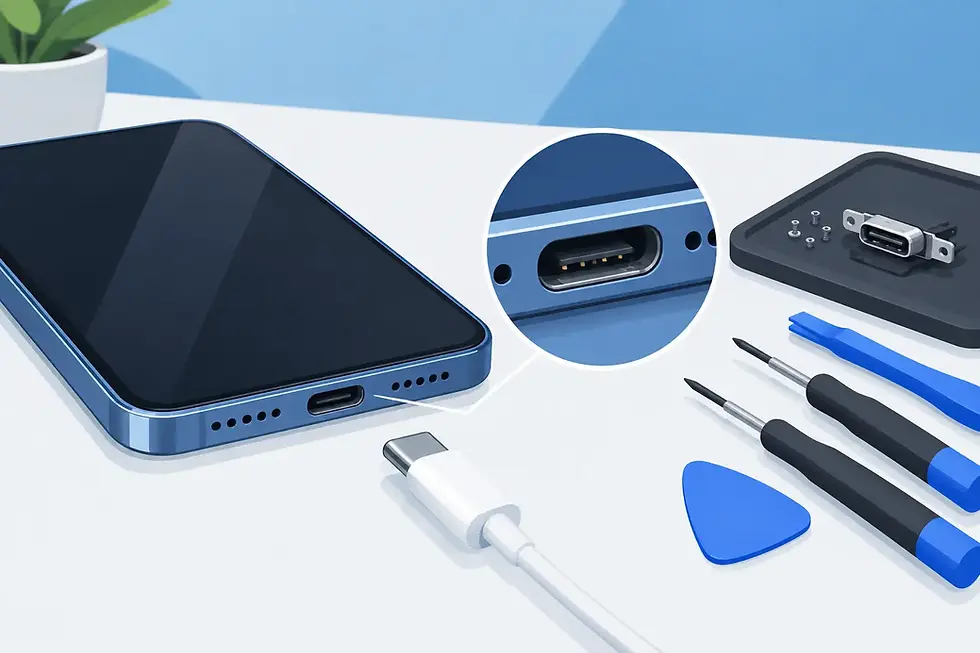
Before assuming you need a new battery, try a known-good cable and adapter. Check the charging port under good lighting. Lint can pack tightly into the port and prevent the connector from seating correctly. Do not use metal objects to dig inside, since that can damage the internal pins.
If the phone only charges at a certain angle, disconnects when touched, or will not charge with multiple quality cables, the port may need repair. If it charges normally but loses power far too quickly, battery wear becomes more likely. A technician can inspect both systems and recommend the repair that actually solves the problem.
How Long Should a Phone Battery Last?
There is no exact calendar date for battery replacement. Many people start seeing meaningful battery decline after about two to three years, but a battery can wear sooner with heavy use, frequent heat exposure, or repeated full discharges. Light users may get more time.
Your device model matters too. A large phone with a healthy battery may still struggle through a demanding day of hotspot use, video streaming, navigation, and camera work. On the other hand, a smaller phone may need charging more often even when the battery is functioning normally.
The right time to replace a battery is when its condition disrupts the way you use your phone, or when it shows physical warning signs. It does not have to be completely dead before service makes sense.
When Battery Replacement Is Worth It
Battery replacement is often a smart choice when the phone is otherwise in good shape. If the screen works, cameras still meet your needs, storage is sufficient, and the phone receives the software support you rely on, a new battery can extend its useful life.
It may be less appealing if the device has several major issues at once, such as serious water damage, a failing display, broken cameras, and software limitations. Even then, a technician can help you understand which issue is causing the immediate problem so you can make an informed decision.
For most people, the trade-off is simple: if your phone does what you need but cannot keep a charge, a battery repair is usually more sensible than living with constant power anxiety.
Can You Make a Weak Battery Last Longer?
A few habits can reduce strain while you decide whether to replace the battery. Keep the phone out of hot cars and direct sun, remove it from a case if it becomes very hot while charging, and use reliable charging accessories. Installing current software updates can also help address power-management bugs.
These steps may improve daily battery life, but they cannot restore lost battery capacity. If the battery is chemically worn, settings changes only delay the same problem. Repeatedly forcing a struggling battery through your day can mean missed calls, unreliable maps, and a phone that shuts off when you need it most.
Get a Clear Answer Without the Repair-Shop Wait
A weak battery should not force you to lose time sitting in a repair-store line. IkePhones sends certified technicians to convenient locations for phone and tablet repair across Atlanta and Gwinnett County. They can assess whether the issue is the battery, charging port, software, or another component, then complete the right repair with quality parts.
Whether you use an iPhone, Samsung Galaxy, Google Pixel, Motorola, OnePlus, or another Android device, getting the problem checked early can keep a small battery issue from becoming a daily disruption. When your phone stops lasting long enough to support your real life, that is the right time to act.


Comments